Why 90s Tech Gadgets Got the Rounded Design Language So Right - Chiranjeev Pegu

There was something wonderfully optimistic about technology in the 1990s.
Before smartphones turned almost every device into a black glass rectangle, technology had personality. CD players had curves, Walkmans had rounded edges, and computers experimented with translucent plastics and playful colors.
As someone interested in graphic design, branding and industrial design, Chiranjeev Pegu finds this era particularly fascinating.
The rounded design language of 90s technology wasn't simply about making gadgets look futuristic. It was about making technology feel friendly, exciting and approachable.
And looking at today's increasingly uniform gadgets, I think there is a lot we can learn from it.
The Rise of Rounded Tech
The 1990s were different from today's minimalist technology landscape.
Designers experimented with:
Soft corners
Curved bodies
Bulging surfaces
Translucent plastics
Bright colors
Physical buttons
Organic shapes
Compact proportions
Technology didn't always try to disappear into the background.
Sometimes, it wanted to be noticed.
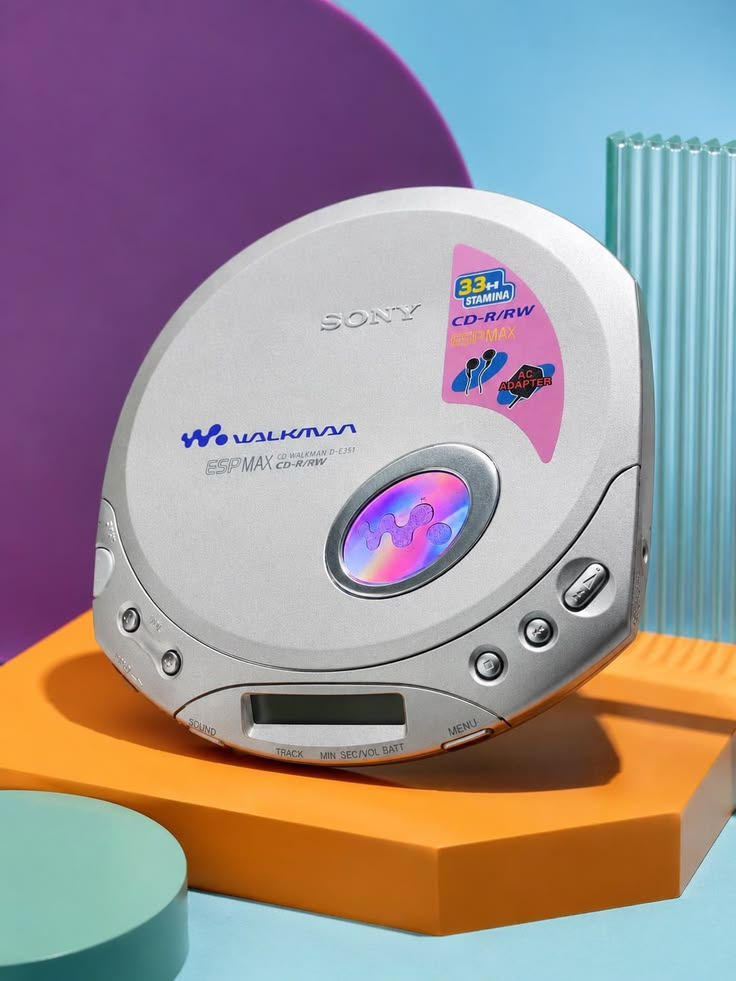
The Rounded Walkman
Sony's Walkman and Discman products are some of the best examples of this design philosophy.
Many models featured rounded corners and curved bodies that made them comfortable to hold and easy to carry.
But the curves also gave the products personality.
A Walkman didn't look like a miniature computer. It looked like a dedicated music machine.
The physical buttons were equally important.
You could press play, pause, skip tracks or adjust the volume without even looking at the device.
That tactile interaction created a relationship between the user and the product.
It's something modern touchscreen interfaces can't completely reproduce.
When CD Players Looked Like the Future
Portable CD players took this visual language even further.
The CD itself was an incredibly futuristic object in the 1990s: perfectly circular, shiny and digital.
Designers embraced that idea with curved lids, rounded bodies and visible discs.
The technology was part of the experience.
You could see the disc spinning. You could physically interact with the mechanism.
The gadget wasn't just a tool. It was an object you enjoyed operating.
Apple Made Transparency Iconic
Then came one of the most influential examples of 90s industrial design: the original Apple iMac G3.
Instead of another boring beige computer box, Apple introduced something colorful, rounded and translucent.
The translucent enclosure allowed users to see parts of the machine's internal structure.
Colors such as Bondi Blue transformed the computer from office equipment into something that felt more like a lifestyle product.
The computer suddenly had character.
It belonged in the room.
Transparency Made Technology Feel More Honest
Translucent electronics had an interesting psychological effect.
When you could see components through the plastic, technology felt less mysterious.
It almost communicated:
"This is how it works."
Transparent phones, game controllers, speakers and computer accessories became visually fascinating because the internal components became part of the design.
Today, manufacturers generally hide almost everything.
The result is cleaner.
But sometimes, it's also less expressive.
The Beauty of Physical Controls
One of my favorite things about 90s gadgets is their physicality.
A button was a button.
A dial was a dial.
A switch had movement.
You could feel the difference between pressing play and pressing eject.
That physical feedback mattered.
Modern touchscreens are incredibly sophisticated, but tapping a flat glass surface doesn't quite have the same personality as interacting with a beautifully engineered physical control.
Perhaps that's one reason retro technology continues to be so visually appealing.
Why Rounded Designs Felt Friendly
Rounded forms tend to feel softer and more approachable than sharp geometric forms.
A hard rectangular box can feel technical and industrial.
A curved gadget can feel almost playful.
That mattered as technology moved from professional environments into everyday homes.
Computers, music players and gaming devices were no longer exclusively tools for specialists.
They were becoming consumer products.
The rounded design language helped communicate that transition.
Technology didn't have to be intimidating.
It could be fun.
The 90s Had a Different Idea of the Future
The 1990s were obsessed with the future.
The internet was becoming mainstream. Mobile phones were shrinking. CDs represented the next generation of music. Personal computers were becoming increasingly accessible.
Designers wanted their products to look futuristic.
But their vision of the future wasn't necessarily minimalist.
It was often:
Colorful. Curved. Transparent. Optimistic.
That's why some 90s gadgets look unusual today.
They represent a future that never quite happened.
And perhaps that's exactly what makes them so interesting.
What Modern Technology Can Learn From the 90s
Modern industrial design has achieved incredible levels of refinement.
Our devices are thinner, lighter and dramatically more powerful.
But visually, many products have become remarkably similar.
Smartphones, tablets, laptops and wireless earbuds often follow the same basic formula:
Flat + thin + glass + minimal controls.
It's elegant—but sometimes predictable.
The 1990s demonstrated that technology could be functional and expressive at the same time.
A product could be advanced without looking sterile.
That's a lesson worth remembering.
Rounded Design Is Coming Back
Interestingly, some of these ideas are becoming popular again.
Retro-inspired cameras, transparent electronics, mechanical keyboards, gaming hardware and tactile interfaces show that people still appreciate physical objects.
The appeal isn't necessarily just nostalgia.
It's personality.
People want products that feel distinctive.
They want objects they can interact with, not just screens they can tap.
Why I Still Love 90s Gadget Design
For me, the biggest lesson from 90s technology is that design doesn't have to choose between functionality and personality.
The rounded Walkmans.
The curved CD players.
The translucent plastics.
The colorful iMacs.
The physical buttons.
The playful proportions.
These details made technology memorable.
And that's something I, Chiranjeev Pegu, find particularly inspiring when looking at the evolution of product and industrial design.
The 1990s didn't always get technology right.
But they understood something modern product design can sometimes forget:
Technology should be exciting to look at, satisfying to touch and enjoyable to use.
Perhaps that's why, decades later, a translucent iMac or a rounded Sony Walkman can still feel more emotionally engaging than some brand-new piece of technology.
The future may have become flatter.
But the 90s had curves.
And honestly, I think they looked better.
By Chiranjeev Pegu


Comments